Suli’s Diamond

Shatranj • Chess history • Artificial intelligence

Suli’s Diamond

Suli’s Diamond is the mysterious 1000-year unsolved chess puzzle associated with the challenge of the legendary chess master as-Suli. Preserved through medieval manuscripts and later reconstructed by modern historians, endgame experts, and computer analysis, it remains one of the most beautiful intellectual challenges in chess history.

What is Suli’s Diamond?

Suli’s Diamond is a four-piece endgame from shatranj, the historical form of chess. Each side has a shah and a ferz. The shah moves like the modern king. The ferz, or vizier, moves only one square diagonally.

White’s task is to capture Black’s cornered ferz without allowing Black’s shah to capture White’s ferz in return. The position looks simple, but its solution requires opposition, triangulation, zugzwang, corresponding squares, and a shouldering race maneuver or shahs across the board.

As-Suli’s challenge

This position is ancient old, yet neither al-‘Adli nor any one else has said whether it is drawn or can be won. Nor has any one interpreted it, or pointed (diagrammed) it because of its difficulty. There is no one on earth who has solved it unless he was taught it by me. I have never learnt that there was any one before; for if any one had solved it, he would either have written down the solution, or have taught it to some one else. This is the word of As-Suli. (9th century)

Why it matters

It connects ancient chess masters, manuscript culture, modern endgame theory, and computational tablebase analysis.
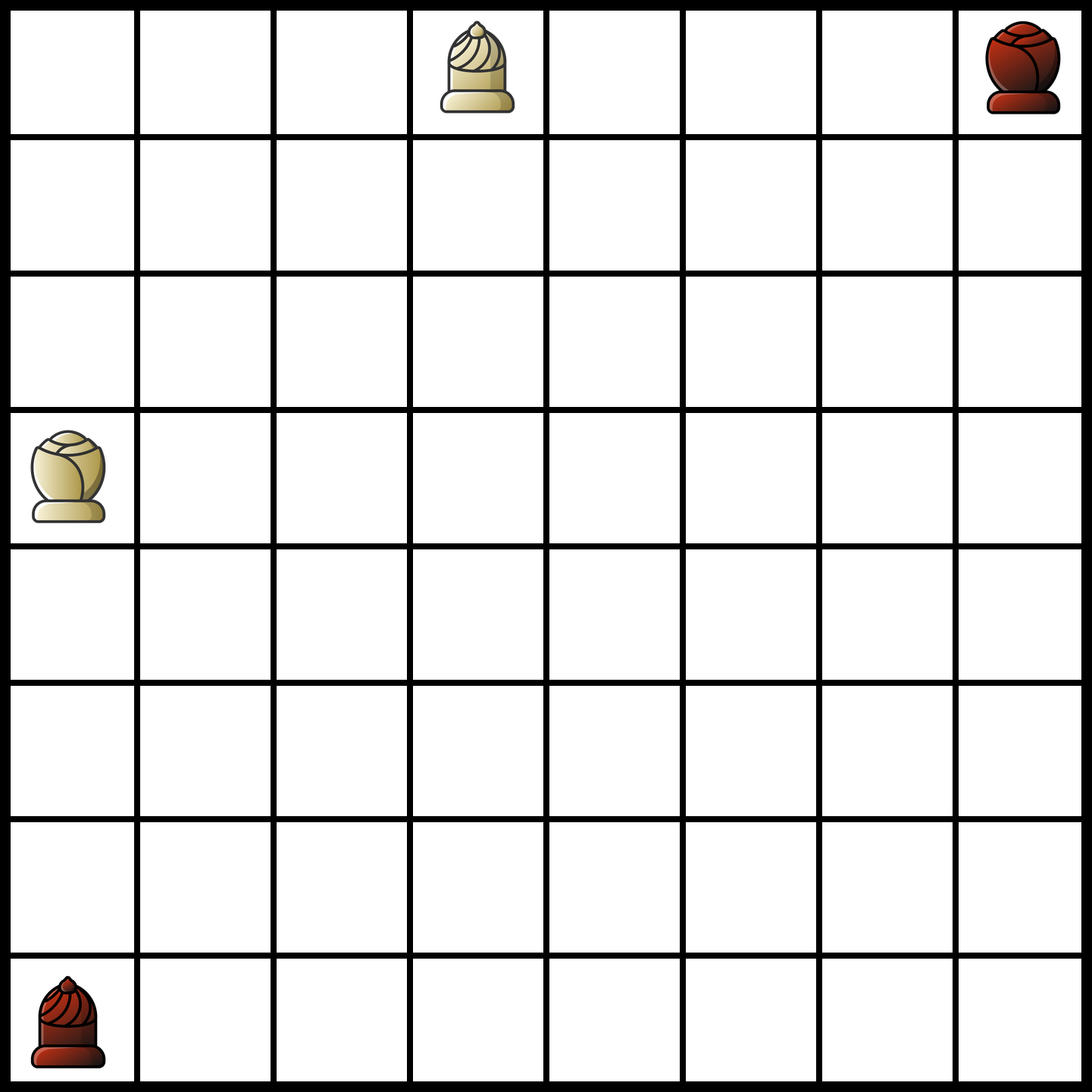
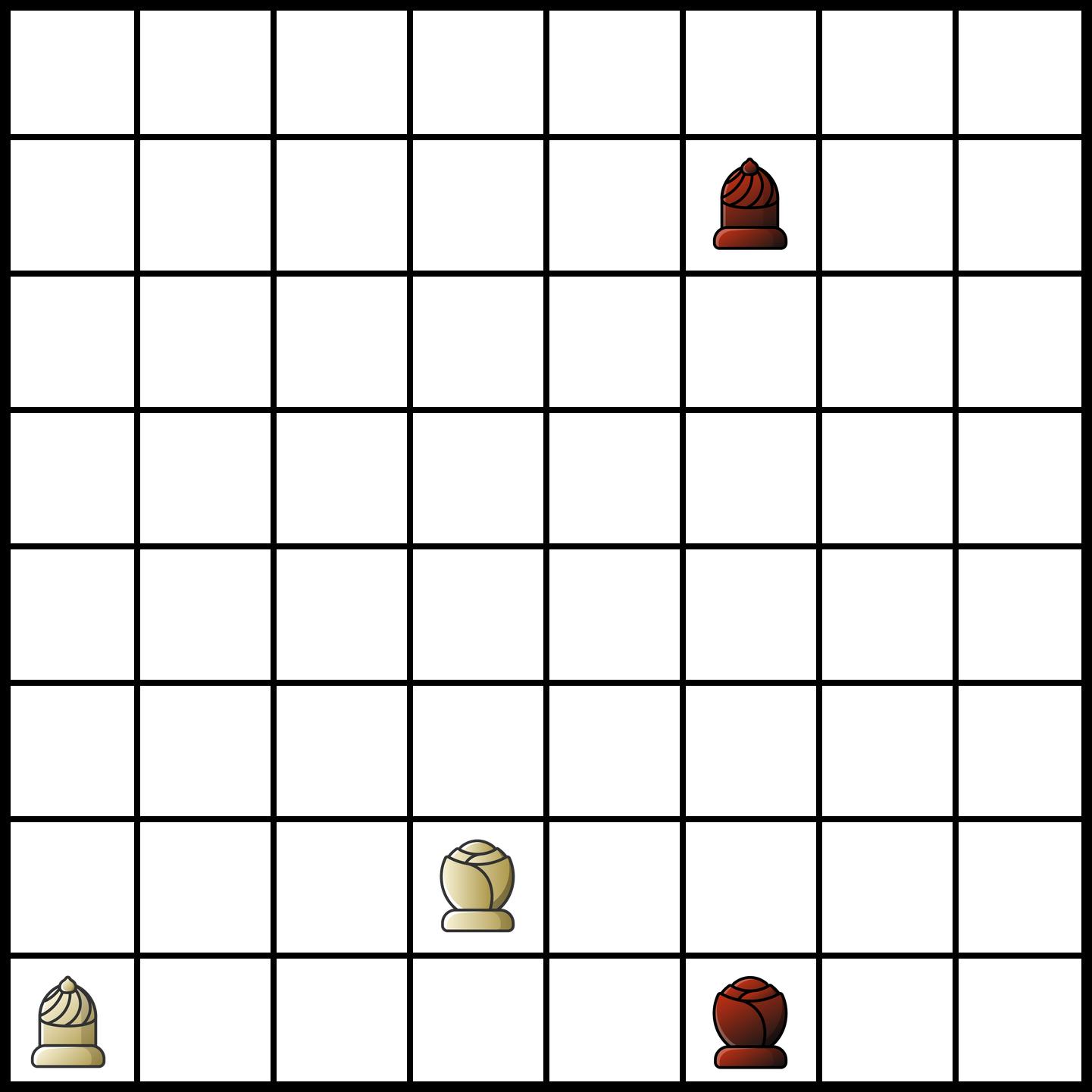
Diagram of Suli’s Diamond canonical shatranj (old chess) position, White to move and win.

Suli’s Diamond, canonical position

White to move and win. 8/8/8/3k4/8/1KQ5/8/q7 w
Historical note: as-Suli presented the problem as an ancient and exceptionally difficult position. Modern research shows that the puzzle was not merely a charming legend: it contains a deep forcing method that remained difficult even for later chess experts.

Watch the full documentary lecture

Start with the video to understand why this small four-piece position became one of the great mysteries of chess history. The lecture follows Suli’s Diamond from the Abbasid world to the Istanbul and Cairo manuscript tradition, then through von der Linde, Murray, Averbakh, Beasley, Hans Ree, John Tromp, and the new Suli-Karatekin reverse-ferz discoveries.

Video contents

Use this chapter guide to navigate the main historical and technical sections of the video before exploring the full family of related positions.

0:00

The 1000-year mystery

An introduction to Suli’s Diamond as a legendary chess and shatranj puzzle with a thousand-year reputation.
1:51

Abbasid chess culture

The world of early shatranj masters, court culture, scholarship, and the first books on chess.
4:50

Wheat and the chessboard

The famous mathematical story that links chess with exponential growth and early computational imagination.
5:38

The Istanbul manuscript

The manuscript tradition behind Suli’s Diamond and the three related positions used to reconstruct the puzzle.
10:14

von der Linde and Murray

How modern chess historians preserved and transmitted the historical record of the puzzle.
12:22

The wrong modern solution

The first Oxford Companion attempt and why it missed Black’s strongest defensive idea.
13:09

Yuri Averbakh

Averbakh’s reconstruction confirmed the depth of as-Suli’s ancient challenge and restored its endgame logic.
15:55

John Beasley and computers

Computer-assisted analysis refined the solution and identified stronger defensive resources.
17:29

Hans Ree and the name

The Max Euwe Center conference and Hans Ree’s essay helped popularize the modern name “Suli’s Diamond.”
20:03

Suli-Tromp Rough Diamond

John Tromp discovered a harder related diamond with a 53-ply solution.
21:02

Recap so far

A brief review of how the puzzle moved from medieval manuscript culture into modern chess history and computer-assisted analysis.
21:55

Retroanalysis and missing pieces

Smullyan-style logic puzzles inspired a new look at missing-piece reconstruction in Suli’s Diamond.
22:47

Suli’s Little Diamond

A newly observed reverse-ferz variant with a compact diamond maneuver and an 11-ply win.
24:07

Suli’s Flipped Diamond

A swapped-piece version of the position that still wins, this time through a 25-ply solution.
24:49

The reverse-ferz secret

The British Museum manuscript position led to a deeper investigation of reverse-ferz endgames.
26:32

Suli’s Tough Diamond

The hardest reverse-ferz diamonds reach 63 plies, more than 50% longer than the canonical study.
28:29

AI and tablebases

The shatranj.ai curriculum teaches the solution through dynamic programming and tablebase generation.
29:33

The solution

The full solution demonstrates opposition, zugzwang, corresponding squares, and precise long-range maneuvering.
49:06

Further projects

Connections to the ŞAHÎ chess set, Deep Sea Chess, TEDxBoston, and the shatranj.art digital exhibit.

Why shatranj.ai studies Suli’s Diamond

Suli’s Diamond is more than a historical curiosity. It is a bridge between cultural heritage and artificial intelligence. In the shatranj.ai curriculum, students can study the puzzle historically, then learn how dynamic programming, retrograde analysis, and endgame tablebases can verify solutions that challenge even expert human intuition.

History

Students encounter Abbasid science, early chess literature, manuscript transmission, and the intellectual world of as-Suli.

Endgame thinking

The puzzle teaches opposition, zugzwang, corresponding squares, and long forcing plans.

Artificial intelligence

The position becomes a compact laboratory for dynamic programming, search, and tablebase construction.

The Suli’s Diamond family

After watching the story of Suli’s Diamond, you can explore the actual positions behind the video. The original puzzle is now understood as the center of a wider family of related shatranj endgame studies: the canonical Suli’s Diamond, John Tromp’s Rough Diamond, and the newer reverse-ferz Suli-Karatekin Diamonds discovered through tablebase analysis.

Try these positions yourself

Copy any FEN below and paste it into the shatranj.ai play and study tool. You can explore the positions, test moves, and study the difference between regular-ferz and reverse-ferz diamonds. Open play.shatranj.ai
Suli’s Diamond canonical shatranj position, White wins in 39 plies

Suli’s Diamond

Canonical position

The classic four-piece shatranj study associated with as-Suli. White must capture the black ferz on a1 without losing the white ferz to a counterattack.
White to move and win in 39 plies
8/8/8/3k4/8/1KQ5/8/q7 w
Suli-Tromp Rough Diamond shatranj position, White wins in 53 plies

Suli-Tromp Rough Diamond

John Tromp’s harder related diamond

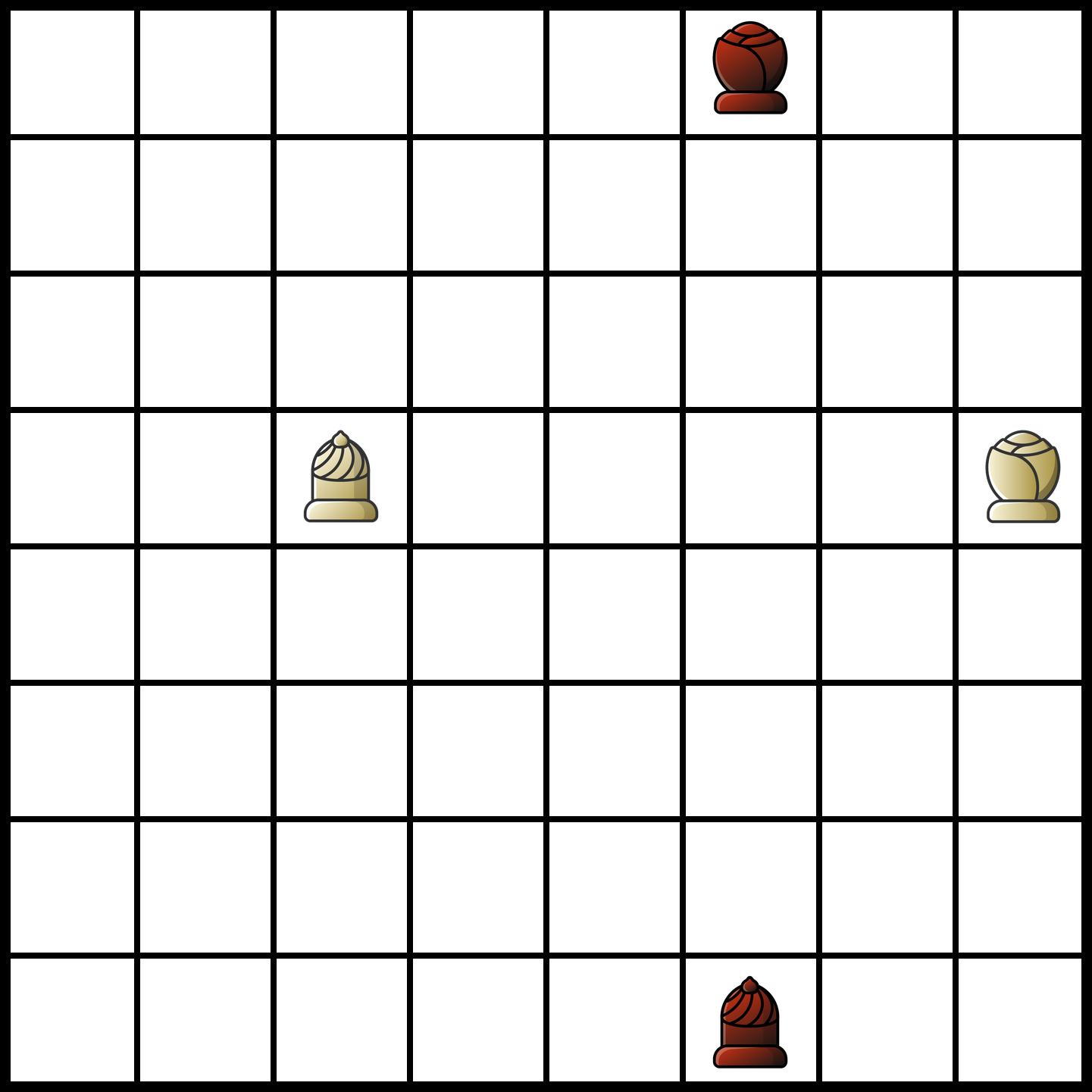
A harder transpositional relative discovered by John Tromp. With best play, it leads into the classical Suli’s Diamond idea after a longer forcing route.
White to move and win in 53 plies
3Q3k/8/8/K7/8/8/8/q7 w
Suli-Karatekin Tough Diamond reverse-ferz shatranj position, White wins in 63 plies

Suli-Karatekin Tough Diamond

Reverse-ferz diamond

One of the hardest known members of the Suli’s Diamond family. In this reverse-ferz setting, the two ferzes move on opposite diagonal complexes and cannot capture each other.
White to move and win in 63 plies
5k2/8/8/2Q4K/8/8/8/5q2 w
Suli’s Little Diamond reverse-ferz shatranj position, White wins in 11 plies

Suli’s Little Diamond

Missing-piece variation

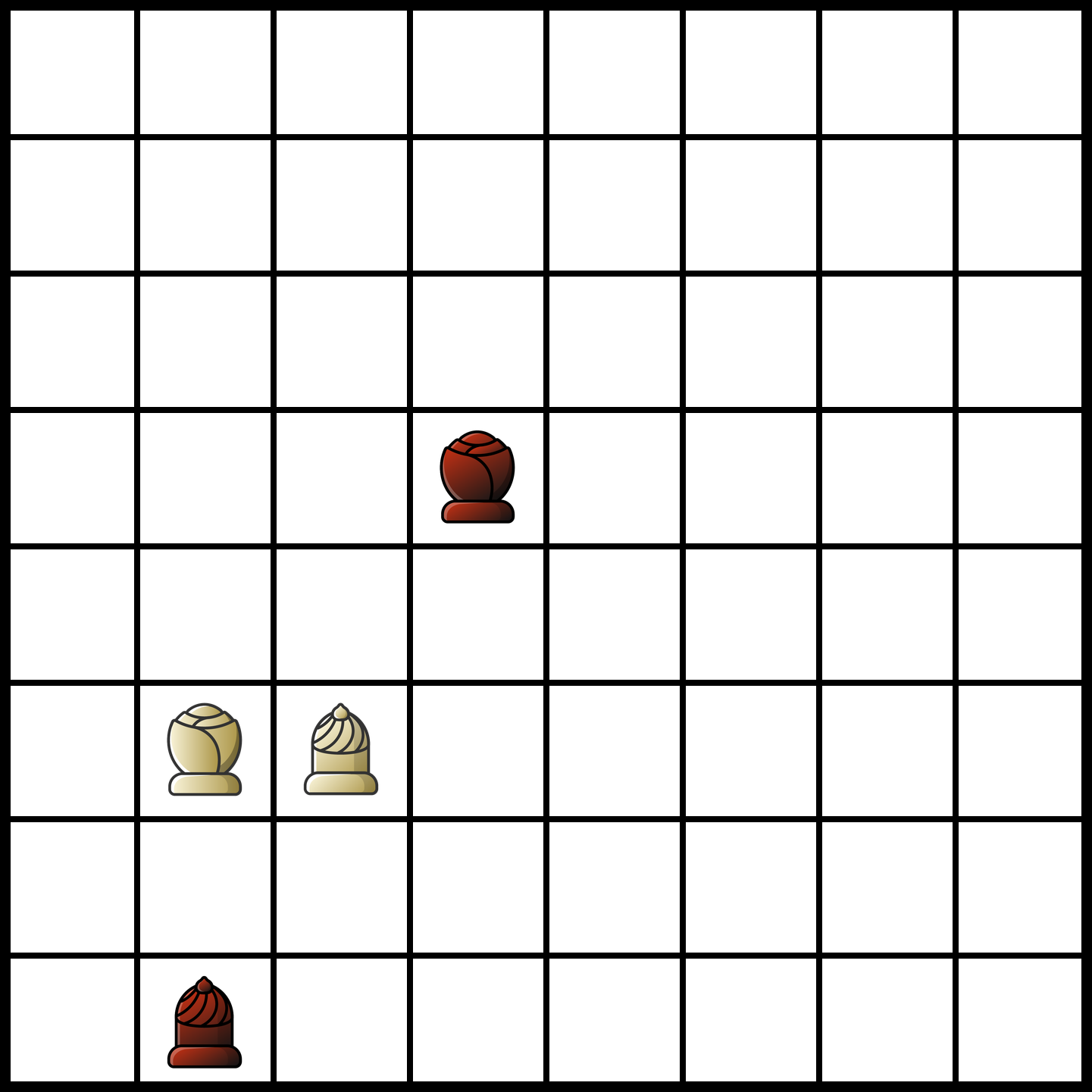
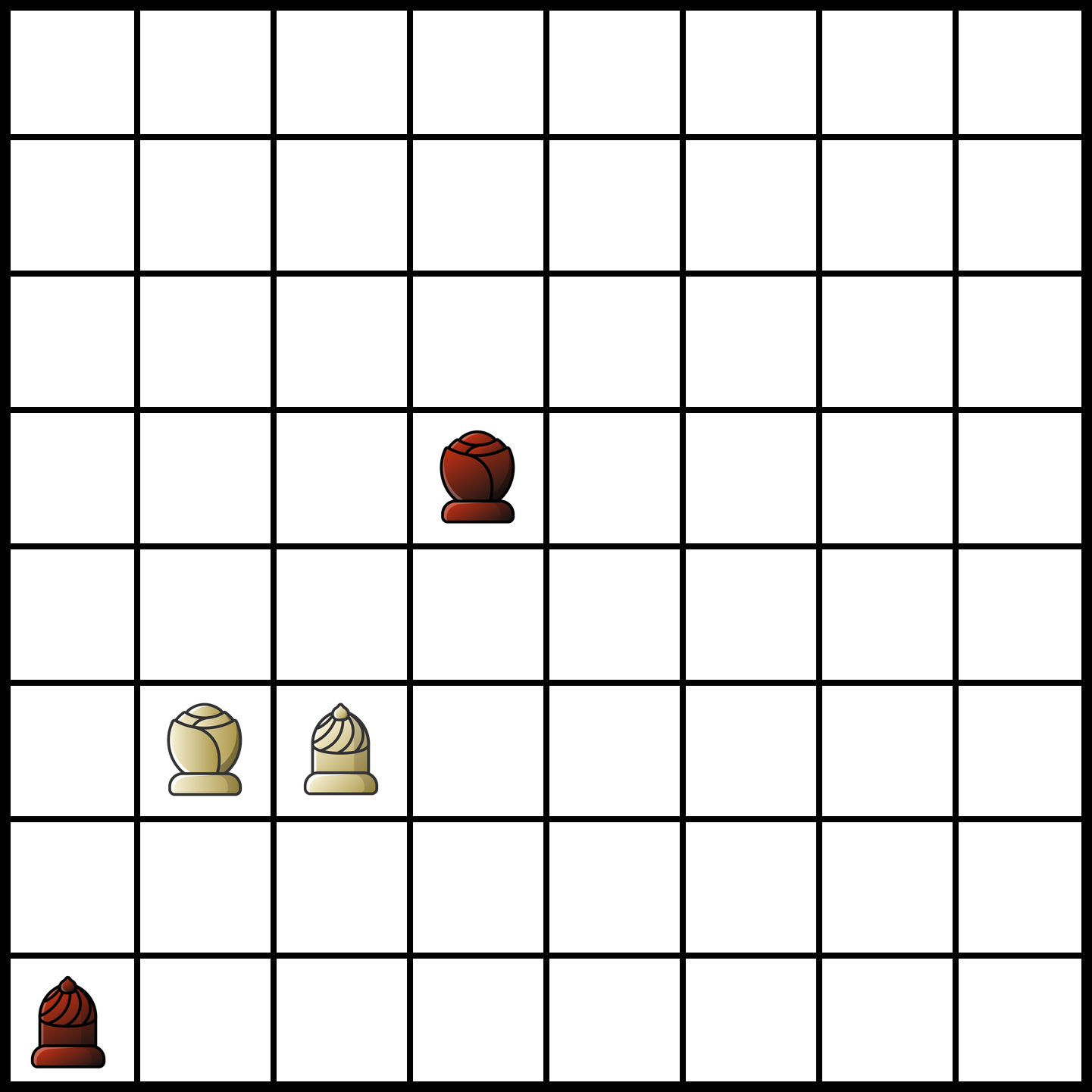
A compact reverse-ferz study inspired by the manuscript question of the missing ferz. The winning idea begins with Ferz b4 and creates a small diamond-shaped maneuver.
White to move and win in 11 plies
8/8/8/3k4/8/1KQ5/8/1q6 w
Suli’s Flipped Diamond reverse-ferz shatranj position, White wins in 25 plies

Suli’s Flipped Diamond

Swapped shah and ferz version

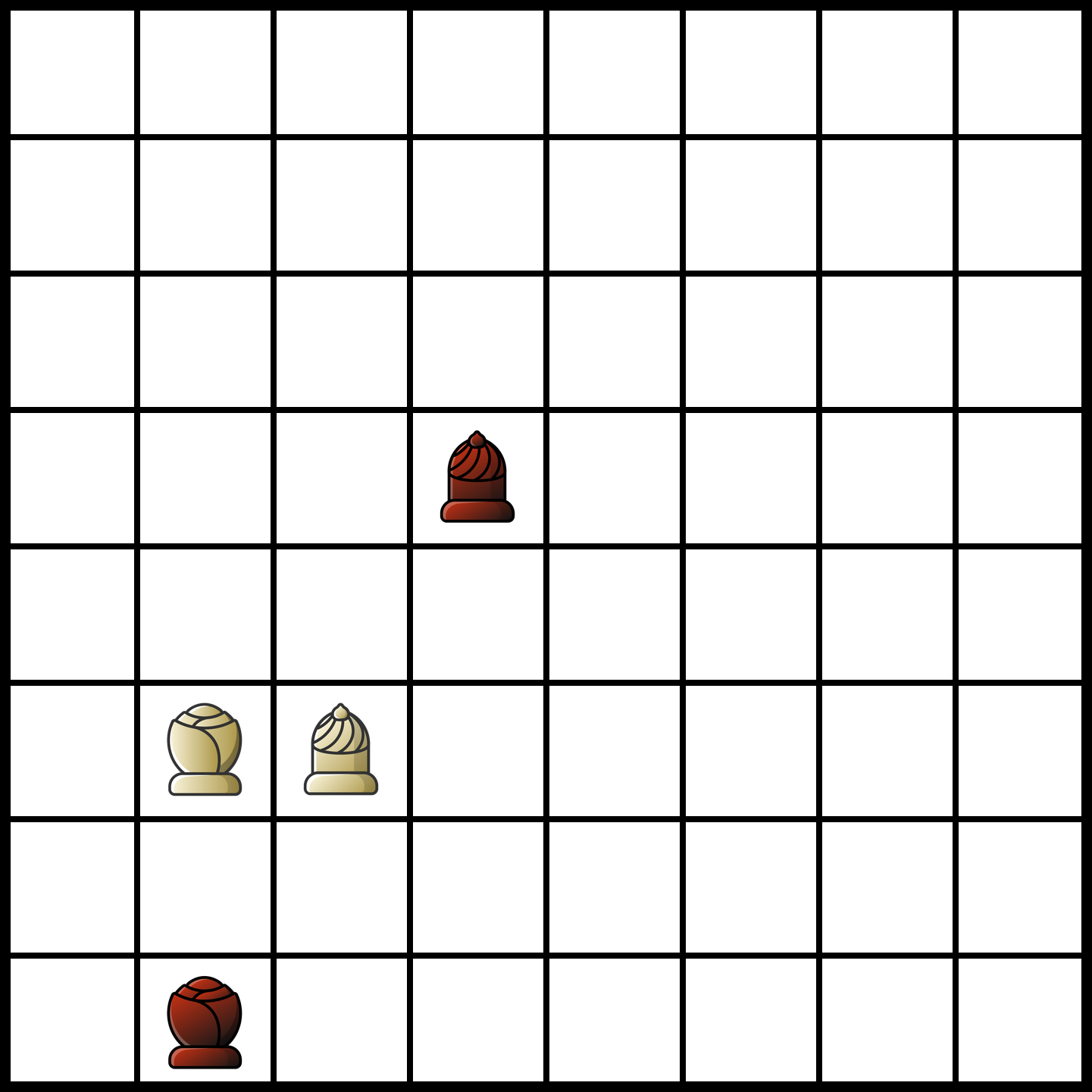
A related reverse-ferz position created by swapping the black shah and ferz. White still wins, again beginning with the key move Ferz b4.
White to move and win in 25 plies
8/8/8/3q4/8/1KQ5/8/1k6 w
Suli-Karatekin Concave Tough Diamond reverse-ferz shatranj position, White wins in 63 plies

Suli-Karatekin Concave Tough Diamond

Concave reverse-ferz diamond

Another 63-ply reverse-ferz position from the Suli-Karatekin Diamond family. Its geometry shows how the ancient puzzle expands into a larger landscape of difficult endgame studies.
White to move and win in 63 plies
8/5q2/8/8/8/8/3K4/Q4k2 w

Read, watch, play, and study

Frequently asked questions

Is Suli’s Diamond a chess puzzle or a shatranj puzzle?It is a shatranj puzzle. Shatranj is the historical form of chess in which the ferz, the ancestor of the modern queen, moves and attacks only one square diagonally. Also, to win, capturing all of opponents pieces while keeping at least one non-shah piece of your own is sufficient: checkmate is not necessary.
Why is the puzzle called a diamond?The modern metaphorical name primarily reflects the intellectual beauty of the canonical endgame composition and the enduring 1000-year unsolved challenge of As-Suli. Later, it was discovered that to win the Suli’s Little Diamond position a compact diamond maneuver with the ferz was necessary. Also, the Suli-Karatekin Tough Diamond family has 24 diamond shape piece compositions, which made the diamond geometry more visible.
Who solved Suli’s Diamond?The historical record found in 3 manuscripts, as narrated by Hans Ree through Averbakh during the 1993 Max Euwe Center’s conference with chess historians, suggests that top endgame authorities of modern chess agree that as-Suli understood the essential winning idea, otherwise he wouldn’t have been able to make such a bold claim. Yuri Averbakh reconstructed the clues left in these 3 diagrams into a complete solution and confirmed it in modern chess literature, and John Beasley’s computer-assisted analysis refined the strongest defense. Later, John Tromp found a transposed position through computer assistance that shows there is a harder version Suli’s Diamond that transposes to the canonical version after best play from both sides. Finally, the diagram in the 4th manuscript with reverze ferz piece composition has been revealed to have a hidden difficulty by Tamer Karatekin and that Black needs to play accurately a series of single moves to achieve a draw. So in all these 4 positions the judgement of As-Suli was correct as to the game result, he did also provide the first few moves of the solution. The complete solutions were later discovered through human analysis and confirmed with computer assistance.
What are Suli-Karatekin Diamonds?They are newly discovered reverse-ferz relatives of Suli’s Diamond. In these positions, the ferzes move on opposite diagonal complexes and cannot capture each other. The hardest examples reach 63 plies, while the canonical Suli’s diamond was 39 ply and all same-ferz positions in shah+ferz vs shah+ferz endgames can maximally reach a 53 ply solution as shown by John Tromp. So the Suli-Karatekin diamonds are the toughest ones.
Where can I find the complete solution?The full solution and detailed analysis are available through the Zenodo paper, the ARVES reference page, and Lesson 16 of the shatranj.ai curriculum.