
Shatranj.ai präsentiert ein breit gefächertes, zukunftsorientiertes Modell des Schachs in der Bildung: vom obligatorischen Grundschulschach und frühkindlichem Lernen bis hin zu KI-Algorithmen, Schach-Engine-Denken, STEAM-Bildung, kulturellem Erbe, mehrsprachigem Lernen und der Kreativität von Schülern.
Unser Ziel ist es nicht nur, Kindern zu helfen, bessere Schachspieler zu werden. Es soll ihnen helfen, klarer zu denken, kulturell bewusst zu lernen, ethische Entscheidungen zu treffen und zukünftige KI-Architekten zu werden, die verstehen, wie intelligente Systeme aufgebaut sind.
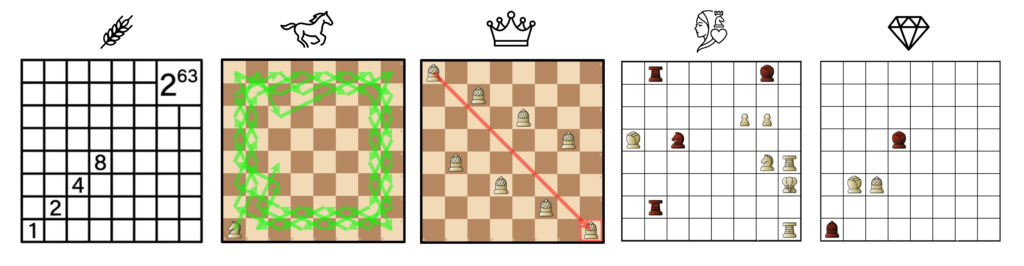
Der Lehrplan von Shatranj.ai verwendet Schach und historische Brettspiele, um KI-Algorithmen durch sichtbare, testbare und erklärbare Systeme zu lehren.
Schach ist nicht nur ein Spiel, ein geistiger Wettkampfsport oder eine außerschulische Aktivität. Es ist auch eine Brücke zwischen den Kulturen, ein formales System zur Vermittlung von Rechenfertigkeiten, ein Weg zur künstlichen Intelligenz und ein gemeinsames menschliches Erbe, das zu vielen Zivilisationen gehört.
Die miteinander verflochtene Geschichte des Schachs und der künstlichen Intelligenz steht im Mittelpunkt unserer Lehrphilosophie. Von den frühen Automaten und der Café-Schach-Kultur bis hin zu Shannon, Turing, Deep Blue, Stockfish, AlphaZero und modernen Lernsystemen bietet das Schachspiel den Studierenden einen der klarsten historischen Pfade, um zu verstehen, wie Menschen sich intelligente Maschinen vorgestellt, gebaut, getestet und verbessert haben.
Wir helfen Schulen, Ministerien, gemeinnützigen Einrichtungen, Jugendorganisationen, Museen, Bibliotheken, Schachpädagogen und STEAM-Programmen, Schach und historische Brettspiele als Werkzeuge für integratives Lernen, rechnerisches Denken, kulturelles Verständnis, mehrsprachige Erkundung, Charakterbildung, Kreativität und zukunftsfähige Fähigkeiten zu nutzen.
Das Aushängeschild für diese Bildungsphilosophie ist der TEDxBoston-Vortrag: Schach: Kulturen überbrücken, KI inspirieren und Bildung neu definieren.
Dieser Vortrag folgt der Reise von Kindheitserinnerungen an das Schachspiel und die schulische Schachausbildung bis hin zum Design des ŞAHÎ-Schachspiels, dem verlorenen Elefanten auf dem Schachbrett, spirituell integrativem Schachdesign, alten Schachrätseln und der tiefen Beziehung zwischen Schach und künstlicher Intelligenz.
Der Vortrag stellt Schach als kulturelle Brücke und als Bildungsweg zur künstlichen Intelligenz vor. Er verbindet die Geschichte von Shatranj, die Entwicklung von Schachfiguren, den Aufstieg von Schachengines und die Mission von Shatranj.ai, KI-Bildung zugänglicher, inklusiver und historisch sinnvoller zu machen.
Die erweiterte Version von Shatranj.ai ansehen • Die TEDxBoston-Version ansehen • Alle Vorträge von Shatranj.ai anzeigen
Einführung: Schach, Kultur, KI und Bildung
Meine Schachreise von Jugoslawien nach Istanbul, MIT und Coaching
Shatranj.ai, shatranj.art und die vereinigende Kraft des Schachs
Warum Schachunterricht mehr Kultur- und Geistesgeschichte braucht
Schach in Schulen, Gerechtigkeit und pädagogische Auswirkungen
Ist Schach ein Spiel, ein Sport oder etwas mehr?
Benjamin Franklin und die Moral des Schachs
Der mechanische Türke, Philidor und die Schachkultur im Café
Schach, Kolonialgeschichte und wechselnde Regeln
Religion, Schachsymbole und die Notwendigkeit der Integration
Schach für multikulturelle Klassenzimmer neu denken
Wie der Elefant aus dem Schach verschwand
Entwurf von Abul-Abbas, der Elefanten-Schachfigur
Historische Inklusiv-Schachspiele und das Gülşah-Schah-Design
Entwerfen der ŞAHÎ-Schachfiguren
Warum das Schachspiel ŞAHÎ genannt wird
Schach als intellektuelle Brücke zur künstlichen Intelligenz
Antike Schachrätsel: Weizen und das Schachbrett, Pferdetour, Acht Königinnen und Sulis Diamant
Schach und KI von Shannon und Turing bis AlphaZero
Bostons Schach- und Computerschachverbindungen
Shatranj.ai Lehrplan und AI-Algorithmen durch Schach
Viele Schachprogramme legen den Schwerpunkt auf Turniererfolge, Wertungen, Wettbewerb und Schach als Denksport. Dies sind wertvolle Bestandteile der Schacherziehung, aber sie sind nicht die ganze Geschichte.
Shatranj.ai erweitert das Schachspiel in der Bildung zu einer breiteren Lernphilosophie. Wir behandeln Schach und historische Brettspiele als Werkzeuge für Problemlösung, rechnerisches Denken, kulturelle Kompetenz, ethische Reflexion, mehrsprachiges Lernen, Kreativität, Design, Charaktererziehung und künstliche Intelligenz.
In unserem Modell lernen die Schüler nicht nur, wie man Spiele gewinnt. Sie lernen, Fragen zu stellen, Ideen zu testen, Strategien zu vergleichen, Entscheidungen zu erklären, einfache Maschinen zu bauen, Daten zu interpretieren und zu verstehen, wie intelligente Systeme Entscheidungen treffen.
Wettkampfschach kann Disziplin, Widerstandsfähigkeit, Konzentration und strategisches Geschick fördern. Aber Schach in der Bildung sollte nicht auf Trophäen, Wertungen, Spitzenleistungen oder ein enges Mind-Sport-Modell beschränkt sein.
Unser Ansatz begrüßt Anfänger, nicht wettbewerbsorientierte Lernende, junge Kinder, Lehrer, Künstler, Programmierer, Museumspädagogen, Jugendarbeiter, Eltern, mehrsprachige Klassen und Schüler, die durch Kultur, Geschichte, Rätsel, Design, Geschichtenerzählen, Technologie oder soziales Lernen mit Schach in Verbindung gebracht werden können.
Unser zentraler Standpunkt ist einfach: Schach in der Bildung sollte die Bildungsergebnisse maximieren, nicht nur die Schachleistung. Ein modernes Schachprogramm kann die frühkindliche Entwicklung, das mathematische Denken, das sozial-emotionale Lernen, das mehrsprachige Lernen, die kulturelle Integration, das historische Verständnis, das gestalterische Denken, das rechnerische Denken, die KI-Algorithmen und die Kreativität der Schüler fördern.
Schach ist seit langem mit der Charaktererziehung verbunden. Benjamin Franklins berühmter Aufsatz, Die Moral des Schachs, Er verstand Schach als eine Möglichkeit, Voraussicht, Umsicht, Vorsicht, Ausdauer, Fairness und respektvolles Verhalten zu üben.
Shatranj.ai aktualisiert diese Tradition für moderne Klassenzimmer. Schüler können Schach nutzen, um Geduld, verzögerte Belohnung, respektvollen Wettbewerb, evidenzbasierte Entscheidungsfindung, Fehleranalyse, Widerstandsfähigkeit und ethische Reflexion zu üben. Diese Gewohnheiten sind in der Schule, in der Technologie, im gesellschaftlichen Leben und im späteren Berufsleben wichtig.
Shatranj.ai ist nicht nur ein MINT-Projekt. Es ist ein multidisziplinäres Lernmodell, das Schach mit Kunst, Geschichte, Philosophie, Literatur, Wirtschaft, Sozialwissenschaften, kulturellem Erbe, Mathematik, Computerwissenschaft und künstlicher Intelligenz verbindet.
Dies ist wichtig, weil Schach als Bildungsobjekt ungewöhnlich reichhaltig ist. Es ist ein mathematisches System, ein historisches Artefakt, eine Designsprache, eine soziale Praxis, ein strategisches Spiel, eine literarische Metapher, ein wirtschaftliches Modell der Entscheidungsfindung und eines der wichtigsten Testfelder in der Geschichte der künstlichen Intelligenz.
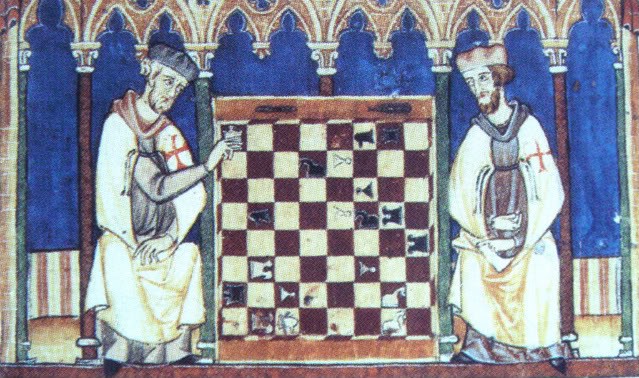
Historische Manuskripte helfen den Schülern, Schach als lebendige Brücke zwischen Kultur, Sprache, Geschichten und Lernen zu sehen.
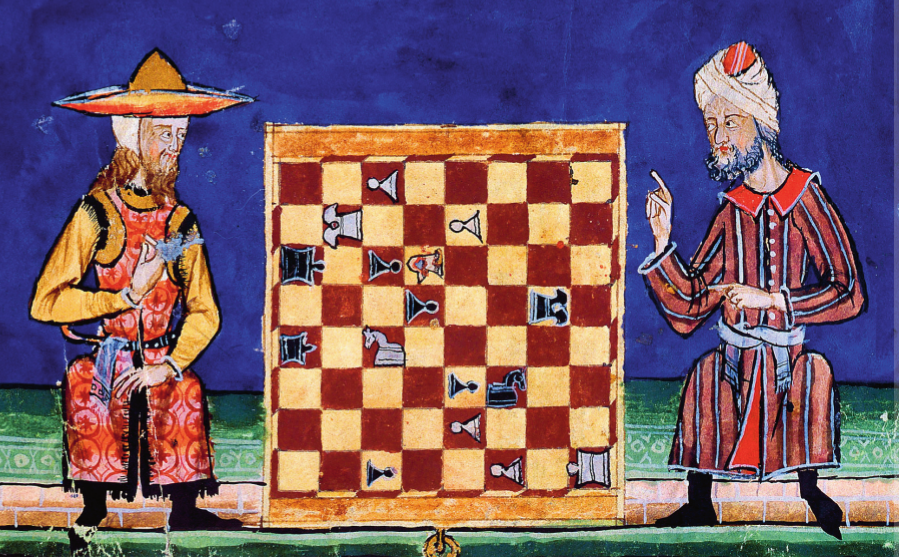
Schach kann als gemeinsames menschliches Erbe gelehrt werden, nicht nur als wettbewerbsorientierte Aktivität oder enges kulturelles Symbol.
Das Schachbrett wird zu einem sichtbaren System für den Unterricht in Algorithmen, Suche, Bewertung und intelligentem Softwaredesign.
DeepSeaChess ist unsere Schachstiftung für Kinder im frühen Kindesalter und für Grundschulen. Sie wurde auf der Grundlage direkter Erfahrungen mit jungen Lernenden im Klassenzimmer entwickelt und an Stiftungsschulen der Technischen Universität Istanbul erprobt, wo Schach als obligatorische Lernaktivität für Schüler der ersten und zweiten Klasse eingeführt wurde.
Viele Schulen bieten Schach als freiwillige Arbeitsgemeinschaft an. Unsere Erfahrung zeigt, dass Schach auch als strukturiertes Ganztags-Lernprogramm mit klaren Lernzielen, altersgerechten Materialien, Lehrerunterstützung und einem modernen Lehrplanmodell konzipiert werden kann.
Ein modernes obligatorisches Schachprogramm sollte Kindern nicht nur beibringen, wie die Figuren bewegt werden. Es sollte die Aufmerksamkeit, das Arbeitsgedächtnis, das räumliche Denken, die Mustererkennung, das respektvolle Spiel, das Abwechseln, die Routine im Klassenzimmer, das Selbstvertrauen, die Neugierde, das frühe mathematische Denken und das sozial-emotionale Lernen fördern.
DeepSeaChess unterstützt auch das kulturell integrative und mehrsprachige Schachlernen. Schachfigurennamen, Geschichten, Brettkoordinaten, Unterrichtssprache und visuelle Materialien können Kindern helfen, das Denken mit Vokabular, Symbolen, Herkunft und Kommunikation zu verbinden.
Erfahren Sie mehr über den DeepSeaChess-Lehrplan
Schach kann verschiedene Dimensionen des Lernens von Schülern aufdecken und stärken. Ein starkes Schulschachprogramm sollte den Erfolg nicht nur an den Turnierergebnissen messen. Es sollte auch beobachten, wie SchülerInnen argumentieren, erklären, zusammenarbeiten, ausdauernd sind, sich Muster merken, mit Emotionen umgehen und Ideen auf neue Situationen übertragen.
Shatranj.ai und DeepSeaChess können Lernergebnisse in verschiedenen Bereichen unterstützen:
Shatranj.ai lehrt KI durch Algorithmen, die die Schüler sehen, testen, debuggen und erklären können. Schach und historische Brettspiele machen abstrakte KI-Konzepte konkret, weil jede Position einen Zustand hat, jeder Zug den Zustand verändert und jeder Algorithmus eine Spur hinterlässt, die untersucht werden kann.
Der Lehrplan beginnt mit der Darstellung des Spielbretts und der Generierung legaler Züge und geht dann schrittweise zu Suche, Bewertung, dynamischer Programmierung, Verstärkungslernen und AlphaZero-ähnlichem Selbstspiel über. Auf diese Weise entwickeln sich die Schüler von Spielern zu KI-Architekten.
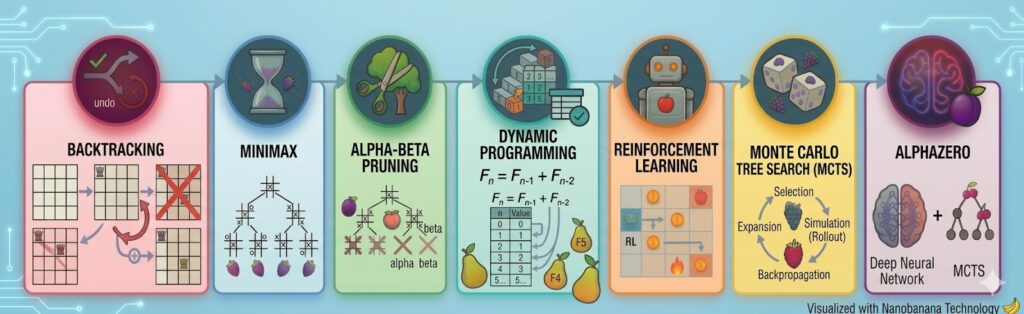
Shatranj.ai lehrt KI-Algorithmen als Entwicklungspfad: von Rätseln und Suche zu Reinforcement Learning, Monte Carlo Tree Search und AlphaZero-ähnlichen Systemen.
Diese algorithmische Sequenz wird nicht als isolierte Informatik-Theorie präsentiert. Sie wird anhand der kulturellen und intellektuellen Geschichte von Spielen gelehrt: antike Rätsel, mittelalterlicher Shatranj, Manuskriptpositionen, moderne Schachengines und zeitgenössische KI-Systeme.
Ein zentraler Gedanke von Shatranj.ai ist, dass Studenten zu Konstrukteuren werden sollten, nicht nur zu Nutzern. Unser Whitepaper, Vom Spieler zum KI-Architekten: Die verflochtene Geschichte von Schach und künstlicher Intelligenz als Lehrmeister für die Zukunft der Informatik, erklärt, wie Schach und historische Brettspiele Schülern helfen können, künstliche Intelligenz von innen zu verstehen.
Das Ziel ist nicht nur KI-Kompetenz im Sinne von Bewusstsein oder verantwortungsvoller Nutzung. Das Ziel ist es, SchülerInnen dabei zu unterstützen, KI-Architekten zu werden: junge Menschen, die verstehen, wie intelligente Systeme dargestellt, entworfen, getestet, verbessert und erklärt werden.
Anhand von Schach, Shatranj und historischen Brettspielen können die Lernenden Suchalgorithmen, Evaluation, Rekursion, Pruning, dynamische Programmierung, Verstärkungslernen, Selbstspiel und die Entwicklung von Schachengines von der frühen symbolischen KI bis zu modernen Systemen wie Stockfish und AlphaZero studieren.
Das Schachspiel ist eine der deutlichsten Brücken zwischen menschlicher Strategie und maschineller Intelligenz. Das Brett bietet den Schülern ein sichtbares System, in dem sie Koordinaten, Zustände, legale Züge, Suchbäume, Bewertung, Planung, Feedback und Lernen studieren können.
In Shatranj.ai hören die Schüler nicht nur, dass es KI gibt. Sie studieren die Ideen hinter Schach-Software und intelligenten Agenten. Sie lernen, wie ein Programm ein Brett darstellt, legale Züge generiert, Positionen bewertet, zukünftige Möglichkeiten sucht, Kandidatenzüge vergleicht und sich durch Daten und Feedback verbessert.
Erkunden Sie den Shatranj.ai-Lehrplan • Besuchen Sie die Lernplattform Shatranj.ai
Shatranj.ai baut auf demselben offenen Bildungsgedanken auf wie frühere europäische Projekte zum Thema Schach in der Bildung, erweitert das Modell jedoch in Richtung multidisziplinäres Lernen, kulturelles Erbe, KI-Algorithmen und Schach-Engine-Denken.
CASTLE, “Chess Curriculum to Advance Students’ Thinking and Learning Skills in Primary Education” (Schachlehrplan zur Förderung der Denk- und Lernfähigkeiten von Schülern in der Grundschule), zeigte, wie Schach zu einem von Lehrern geleiteten pädagogischen Instrument in Grundschulen werden kann.
CHAMPS, “Chess and Mathematics in Primary School” (Schach und Mathematik in der Grundschule), hat Schach- und Mathematikübungen entwickelt, die das Brett, die Figuren, Gitter, Logik, Geometrie, Kombinatorik und Problemlösung verwenden.
8 x 8 erforscht Strategiespiele auf einem 8×8-Brett, einschließlich einfacher spielerischer Aktivitäten und Spiele für das Klassenzimmer, die Kindern helfen, Muster und Strategien zu entdecken.
ADHS & Schach / Chess4ADHD stellt eine weitere wichtige Richtung in der integrativen Schacherziehung dar: Schach als pädagogische und therapeutische Ressource für Lernende mit ADHS, Autismus, Asperger und anderen sonderpädagogischen Bedürfnissen zu nutzen.
Das Projekt ist mit dem Ökosystem der Schacherziehung in Villalba und Madrid verbunden und legt den Schwerpunkt auf angepasste Übungen, kleine Gruppen, Familien, Aufmerksamkeit, Gedächtnis, Planung, Entscheidungsfindung, Motivation und die Vermeidung von unnötigem Wettbewerbsstress.
Diese Projekte zeigen den Wert von Schach, Schachbrettern, Strategiespielen, Mathematik, Lehrerausbildung, schulischer Umsetzung, Inklusion und besonderen Bildungsbedürfnissen. Shatranj.ai baut auf dieser Bildungstradition auf und legt einen stärkeren Fokus auf KI-Algorithmen, historische Brettspiele, inklusives Design, kulturelles Erbe, interdisziplinäre Lehrpläne und die Kreativität der Schüler.
Shatranj.art erweitert das Schachspiel in der Bildung über das Arbeitsblatt im Klassenzimmer hinaus. Es ist eine kulturelle und pädagogische Ausstellung über die Entwicklung von Schachsätzen, Figuren, Regeln, Terminologie und historischen Brettspielen.
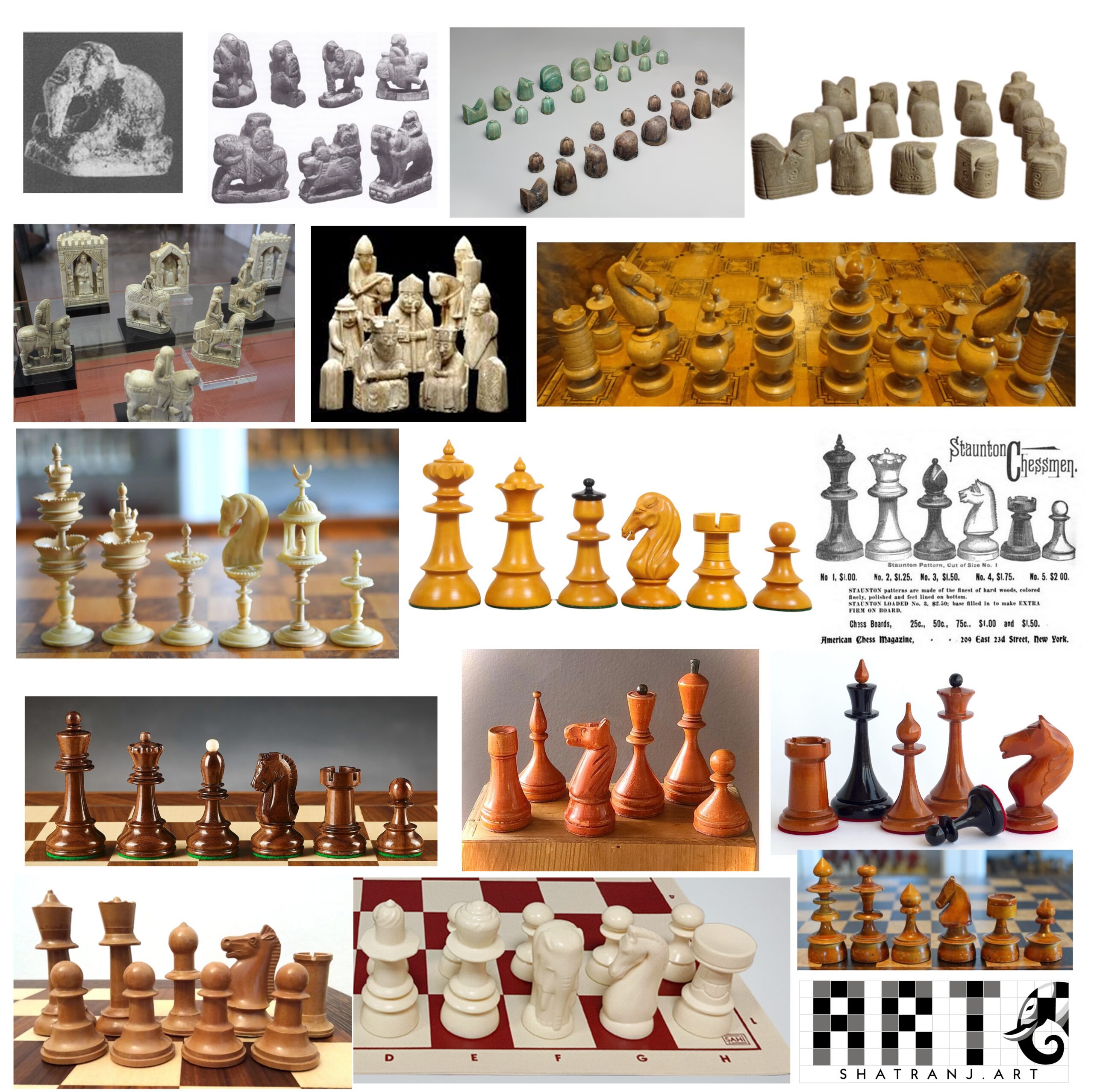
Shatranj.art präsentiert integrative Schachfiguren aus der Geschichte sowie die eigene pädagogische Arbeit des Shatranj.ai-Projekts, die Schulen dabei hilft, Schach als gemeinsames kulturelles Erbe zu lehren.
Die Ausstellung ist für Schulen, Museen, Bibliotheken, Kultureinrichtungen, Jugendprogramme und digitale Unterrichtseinheiten konzipiert. Sie hilft Schülern, Schach nicht nur als Sport zu sehen, sondern auch als eine Reise durch Sprachen, Zivilisationen, Manuskripte, Kunst, Wissenschaft und Design.
Die Ausstellung unterstützt auch die integrative Schacherziehung, indem sie zeigt, dass Schach viele visuelle Traditionen, viele historische Formen und viele kulturelle Heimaten hat. Dies hilft den Schülerinnen und Schülern, Schach als gemeinsames menschliches Erbe zu begreifen und nicht als Eigentum einer Kultur oder eines bestimmten Wettkampfs.
Unsere Bildungsphilosophie zeigt sich auch im physischen Design. Das Schachspiel ŞAHÎ ist ein historisch inspiriertes und kulturell integratives Schachspiel, das die globale Reise des Schachspiels durch die Zivilisationen feiert.
Das Set verbindet das moderne Schachbrett mit Shatranj, historischen Figurennamen, Manuskripttraditionen, visueller Symbolik und integrativen pädagogischen Erzählungen. Es kann Vorführungen im Klassenzimmer, Ausstellungen, Workshops, Kulturprogramme und Schulschachinitiativen unterstützen, die Schach als gemeinsames Erbe und nicht als eng begrenztes kulturelles Symbol präsentieren wollen.
Erfahren Sie mehr über das Schachspiel ŞAHÎ
Suli's Diamond ist eines der besten Beispiele für unsere pädagogische Methode. Es verbindet ein historisches Shatranj-Rätsel mit Endspielanalyse, dynamischer Programmierung, Tablebases, KI-Verifikation und der Bewahrung des geistigen Erbes.
In einem Klassenzimmer oder Workshop kann Sulis Diamant zu einer Lektion über Geschichte, mathematisches Denken, rechnerische Suche, Zustandsräume, Beweise durch Berechnungen und die Beziehung zwischen menschlicher Einsicht und maschineller Analyse werden.
Entdecke Sulis Diamant • Sehen Sie sich den Dokumentarvortrag über Suli's Diamond an
Das Shatranj.ai-Modell für Schach in der Bildung verbindet sich ergänzende Initiativen: Shatranj.ai für die Entwicklung von KI-Algorithmen und Lehrplänen, DeepSeaChess für die Umsetzung des Schachspiels in der frühen Kindheit und in der Grundschule, Shatranj.art für die Vermittlung des kulturellen Erbes, ŞAHÎ für das Design von inklusiven Schachspielen und Shatranj International für die Zusammenarbeit mit gemeinnützigen Organisationen im Bereich kulturell inklusiver historischer Denkspiele.
Dies gibt Schulen und Ministerien einen breiteren Implementierungspfad als ein Standard-Schachklub. Eine Schule kann mit DeepSeaChess mit dem Schachspiel in den ersten Klassenstufen beginnen, mit Shatranj.art auf ein inklusives Schacherbe und Schulausstellungen erweitern und später mit Shatranj.ai KI-Algorithmen, Schach-Engine-Denken und historische Brettspielberechnungen einführen.
Shatranj International unterstützt den weiteren gemeinnützigen Auftrag: die Förderung von Shatranj, historischen Schachvarianten, kulturell integrativen Schachsätzen, historischen Denkspielen und Bildungsinitiativen, die diese Spiele als gemeinsames geistiges und kulturelles Erbe der Menschheit erhalten.
Die Boston Children's Chess Foundation ist Teil dieser breiteren, in Boston ansässigen Bemühungen, Kindern, Familien, Schulen und Gemeinden den Zugang zum Schachunterricht zu erleichtern. Gemeinsam können diese Initiativen Schulschachprogramme, Jugendworkshops, integrative Turniere, Lehrerfortbildung, spendenfinanzierte Öffentlichkeitsarbeit und pädagogische Schachveranstaltungen in Boston und darüber hinaus unterstützen.
Erfahren Sie mehr: DeepSeaChess-Lehrplan • Shatranj International • Shatranj.ai
Schulen und Ministerien brauchen mehr als nur Begeisterung für Schach. Sie brauchen klare Ergebnisse, praktische Umsetzungsmodelle, Unterstützung für Lehrer und eine evidenzbasierte Lehrplangestaltung.
Unser Modell des Schachspiels in der Bildung kann an Ergebnisse wie diese angepasst werden:
Shatranj.ai ist daran interessiert, Schulen und Bildungssystemen dabei zu helfen, von isolierten Schachaktivitäten zu strukturierten Schach-in-Bildungs-Programmen überzugehen.
Wir können Einrichtungen unterstützen, die etwas gestalten oder modernisieren wollen:
Unser Ziel ist es, Schulen dabei zu helfen, Schach so modern wie möglich einzuführen: integrativ, altersgerecht, kulturell sinnvoll, mehrsprachig, technologisch relevant und mit messbaren Lernergebnissen verbunden.
Shatranj.ai wurde für Institutionen entwickelt, die Schach in der Bildung auf einer tieferen Ebene als einem Standard-Schachklub einführen wollen. Unser Modell kann Schulschachprogramme, KI-Algorithmus-Piloten, STEAM-Bereicherung, Kulturerbe-Wochen, interdisziplinäre Lehrplangestaltung, Lehrer-Workshops und Schüler-Innovationsprogramme unterstützen.
Wir freuen uns über die Zusammenarbeit mit Schulen, Bildungsministerien, Schulschachverbänden, internationalen Bildungsnetzwerken, Universitäten, Gemeinden und Jugendorganisationen, die Schach mit modernen Lernergebnissen verbinden wollen.
Erfahren Sie mehr über das FIDE- und ISCF-Jahr des Schachs in der Bildung 2026
Shatranj.ai, Shatranj International, DeepSeaChess, Shatranj.art und Boston Children's Chess Foundation bilden ein praktisches Ökosystem für moderne Schach-Bildungsarbeit: Lehrplan, frühkindliche Implementierung, kulturelles Erbe, KI-Ausbildung, gemeinnützige Arbeit und Zugang zur Gemeinschaft.
Spender und zivilgesellschaftliche Partner können offen zugängliche Lehrpläne, obligatorische oder schulweite Schachprogramme, Jugendworkshops, Lehrerausbildung, integrative Schachfestivals, die Entwicklung von Ausstellungen, kulturell integrativen Zugang zu Schachspielen, KI-Algorithmus-Workshops und den Kontakt zu unterversorgten Gemeinschaften unterstützen.
Das Ziel besteht nicht nur darin, stärkere Schachspieler hervorzubringen. Das Ziel ist es, selbstbewusstere Lernende, bessere Problemlöser, kulturbewusste Schüler, mehrsprachige Denker und junge Menschen zu schaffen, die intelligente Technologien verstehen und gestalten können.
Wir freuen uns über Gespräche mit Spendern, Stiftungen, führenden Persönlichkeiten, Schulbezirken, Universitäten, Gemeinden und Partnern aus der Gemeinschaft, die die Schacherziehung in Boston und auf internationaler Ebene unterstützen wollen.
Der Ansatz von Shatranj.ai ist geprägt von Erfahrungen in der Schachausbildung, Technologie, künstlicher Intelligenz, Lehrplangestaltung, Produktstrategie und internationalen Bildungsprojekten.
Die Arbeit wird von Tamer Karatekin geleitet, einem am MIT ausgebildeten Technologen, ehemaligen türkischen Schachmeister, Schachpädagogen und Lehrplanentwickler. Zu seinem Hintergrund gehören das MITx-MicroMaster-Programm in Daten, Wirtschaft und Politikgestaltung sowie die Zusammenarbeit mit führenden Lehrkräften und Wissenschaftlern aus den Bereichen Informatik, Wirtschaft, Bildung und Wissenschaftsgeschichte.
Diese Kombination ermöglicht es Shatranj.ai, Schach in der Bildung nicht nur als Problem des Schachtrainings zu betrachten, sondern auch als Herausforderung in den Bereichen Lehrplangestaltung, Technologie, Gerechtigkeit, Kultur, mehrsprachiges Lernen und öffentliche Politik.
Schach in der Bildung entwickelt sich zu einer globalen Bewegung. Schulen und Bildungssysteme suchen nach praktischen Wegen, um Problemlösung, digitale Kompetenz, KI-Kenntnisse, rechnergestütztes Denken, mehrsprachiges Lernen, sozial-emotionale Entwicklung und Charakterbildung zu lehren. Schach bietet eine seltene Kombination aus Einfachheit, Tiefe, Geschichte und universeller Anziehungskraft.
Aber die Zukunft des Schachspiels in der Bildung sollte integrativ sein. Sie sollte wettbewerbsfähige Spitzenleistungen respektieren und gleichzeitig Schüler willkommen heißen, die sich durch Kultur, Kunst, Programmierung, Geschichte, Sprache, Design, Geschichtenerzählen, soziales Lernen oder Neugier mit Schach verbinden.
Shatranj.ai trägt zu dieser Zukunft bei, indem es Schulschach, künstliche Intelligenz, Schach-Engine-Denken, kulturelles Erbe, historische Brettspiele, offen zugängliche Lehrpläne und eine schulfreundliche Umsetzung miteinander verbindet.
Wir freuen uns über Gespräche mit Schulen, Ministerien, Stiftungen, gemeinnützigen Organisationen, Gemeinden, Schachverbänden, Kultureinrichtungen, Bildungsleitern und Spendern, die daran interessiert sind, integrative Schach-Bildungsprogramme umzusetzen.
Schach in der Bildung bedeutet, Schach als Lehrmittel für Problemlösung, Planung, Konzentration, mathematisches Denken, kulturelles Erbe, sozial-emotionales Lernen, mehrsprachiges Lernen, rechnerisches Denken und digitale Fähigkeiten einzusetzen.
Ein normales Schulschachprogramm konzentriert sich oft auf das Erlernen der Regeln, die Verbesserung des Spiels und die Vorbereitung auf Turniere. Shatranj.ai geht noch weiter, indem es Schach mit KI-Algorithmen, Codierung, kulturellem Erbe, historischen Brettspielen, inklusivem Design, mehrsprachigem Lernen, Charakterbildung und STEAM-Bildung verbindet.
Nein. Shatranj.ai ist für ein breites Spektrum von Lernenden konzipiert. Die SchülerInnen müssen keine erfahrenen SchachspielerInnen sein, um von den Lektionen über Logik, Strategie, Programmierung, Kultur, Design, Sprache, sozial-emotionales Lernen und künstliche Intelligenz zu profitieren.
Ja. Unsere DeepSeaChess-Erfahrung umfasst ein Schulpilotprojekt, bei dem Schach als Pflichtaktivität für Schüler der ersten und zweiten Klasse eingeführt wurde. Shatranj.ai baut auf dieser Grundlage auf, indem es frühes Schachlernen mit moderner Lehrplangestaltung, STEAM-Bildung, mehrsprachigem Lernen, kulturellem Erbe und KI-Bildung verbindet.
Schach kann Schülern helfen, Voraussicht, Vorsicht, Ausdauer, Fairness, Respekt, Geduld und Reflexion zu üben. Dies verbindet die moderne Schacherziehung mit einer langen Tradition, zu der auch Benjamin Franklins Essay Die Moral des Schachs, und gleichzeitig diese Ideen für einen integrativen, zeitgemäßen Unterricht zu adaptieren.
Shatranj.ai führt Brettdarstellung, legale Zuggenerierung, Backtracking, DFS, BFS, Uniform Cost Search, A*, Minimax, Expectiminimax, Alpha-Beta Pruning, dynamische Programmierung, Reinforcement Learning, Q-Learning, Deep Q-Networks, Monte Carlo Rollouts, Monte Carlo Tree Search und AlphaZero-style Selfplay ein.
Schach hilft Schülern, KI zu verstehen, weil viele wichtige KI-Ideen durch Schach demonstriert werden können: Brettdarstellung, Erzeugung legaler Züge, Suchbäume, Bewertungsfunktionen, Algorithmen, Verstärkungslernen, Selbstspiel und Entscheidungsfindung unter Unsicherheit.
Das bedeutet, dass die Schüler nicht nur KI-Tools verwenden oder Spiele spielen sollten. Sie sollten lernen, wie intelligente Systeme entworfen werden. Anhand von Schach und historischen Brettspielen können die Schüler untersuchen, wie Software ein Spiel darstellt, mögliche Zukünfte sucht, Entscheidungen bewertet, aus Daten lernt und sich im Laufe der Zeit verbessert.
Historische Brettspiele zeigen Schülern, dass Intelligenz, Strategie, Design und Berechnung tiefe kulturelle Wurzeln haben. Sie machen den Schachunterricht auch integrativer, indem sie das Spiel mit vielen Sprachen, Zivilisationen, Manuskripten und Traditionen in Verbindung bringen.
Shatranj.ai baut auf demselben offenen Bildungsgeist auf wie Projekte wie CASTLE, CHAMPS, 8 by 8 und integrative Schachinitiativen wie ADHD & Chess. Diese Projekte trugen dazu bei, den pädagogischen Wert von Schach, Mathematik, Strategiespielen, Lehrerausbildung, besonderen pädagogischen Bedürfnissen und der Umsetzung im Klassenzimmer zu demonstrieren. Shatranj.ai erweitert diese Tradition um kulturelles Erbe, interdisziplinäre Lehrpläne, KI-Algorithmen, Schach-Engine-Denken und die Kreativität von Schülern.
Ja, Schulen können Shatranj.ai-Materialien in Klassenräumen, Clubs, Workshops, außerschulischen Programmen, STEAM-Aktivitäten, Lehrerfortbildungen, Veranstaltungen zum kulturellen Erbe, mehrsprachigen Lernprogrammen und interdisziplinären Projekten verwenden.
Ja. Spender und Stiftungen können frei zugängliche Lehrpläne, obligatorische Schulschachprogramme, Jugendworkshops, Lehrerausbildung, kulturelle Ausstellungen, integrative Schachmaterialien, KI-Algorithmus-Programme und gemeinnützige Schachbildungsinitiativen in Verbindung mit Shatranj.ai, Shatranj International, DeepSeaChess, Shatranj.art und Boston Children's Chess Foundation unterstützen.