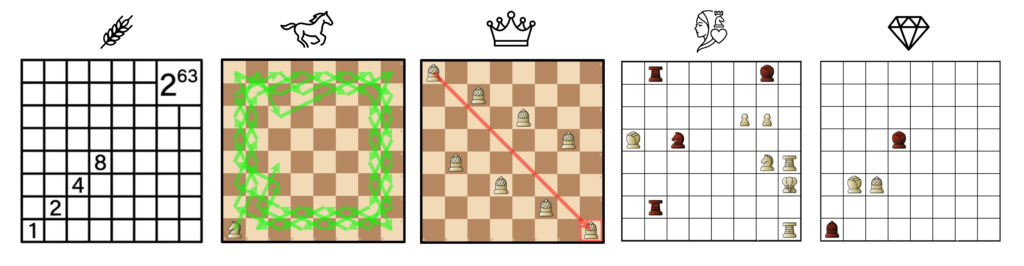
Resuelve los antiguos desafíos del tablero de ajedrez
De izquierda a derecha: El trigo y el tablero de ajedrez, Vuelta a caballo, Ocho reinas, Dilaram Mate, Diamante de Suli
Estudiar el progreso histórico de los algoritmos de inteligencia artificial
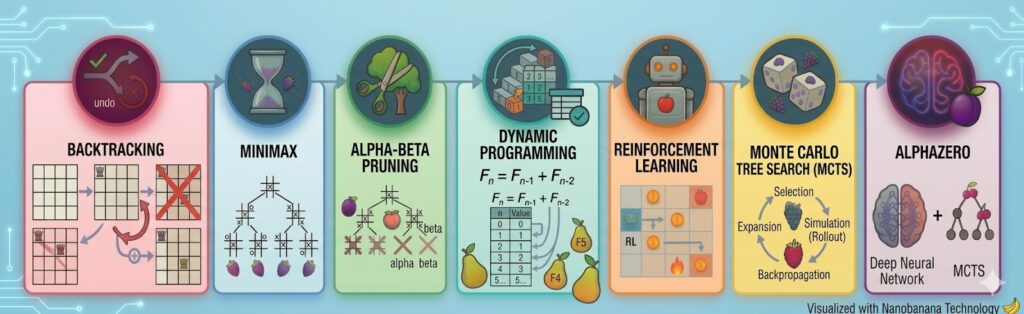
Dominar la Inteligencia Artificial a través de la evolución del software de IA para ajedrez

Plan de estudios de Shatranj.ai - Plan de estudios de inteligencia artificial basado en juegos de mesa históricos para el desarrollo de los jóvenes
Shatranj.ai es un patrimonio primero, construir y experimentar Plan de estudios de IA. Aprendemos la IA moderna reconstruyendo las herramientas intelectuales que dieron forma a la toma de decisiones humana durante siglos: juegos de mesa históricos. Estos juegos atravesaron lenguas y civilizaciones, transmitiendo patrones de lógica, ética y creatividad. Hoy en día, constituyen uno de los laboratorios más claros para comprender la inteligencia artificial, porque cada movimiento es medible, Cada decisión es explicable y cada algoritmo deja un rastro que se puede probar.
Rompecabezas histórico (estudios básicos y fuentes): A lo largo del plan de estudios abordamos una serie de rompecabezas históricos y estudios de finales: Recorrido a caballo (Tour del Caballero), Ocho Reinas, El Trigo y tablero de ajedrez el rompecabezas del crecimiento exponencial, los estudios clásicos de apareamiento (incluyendo Dilaram y jaque mate manuscrito temprano), y Diamante de Suli. Nuestras reconstrucciones y narraciones de rompecabezas se basan en dos libros históricos fundamentales de ajedrez: Libro del Acedrez y Kitab ash-Shatranj-dos de las fuentes más importantes del patrimonio cultural e intelectual del ajedrez y Shatranj.
Este plan de estudios va más allá del ajedrez. Recrearás y analizarás múltiples juegos de mesa históricos como 3 piedras, 9-piedras, Mancala, El Juego Real de Ur, y Damas, además de los sistemas estratégicos más ricos de Qirkat y Shatranj. El objetivo es aprender IA como conjunto de ideas transferibles, no algo ligado a un solo partido.
Hitos de la IA a través del software de ajedrez: Trazamos explícitamente sistemas emblemáticos y lo que cada uno de ellos enseñó al mundo sobre la “inteligencia de las máquinas”: El Turco, Azul oscuro, AlfaCero, y Stockfish. Los alumnos ven cómo busque en, evaluación, limitaciones de ingeniería (chips, memoria, velocidad), y los modernos métodos basados en el aprendizaje dieron forma a la evolución del software de ajedrez y la IA.
A quién va dirigido este plan de estudios
Lo que podrá hacer
Mapa curricular (25 lecciones, agrupadas en 9 secciones)
Sección 1 - Fundamentos y Python básico (Lecciones 1-6)
Lección 1: Ámbito y prioridades del curso
Lección 2: Introducción a la informática y configuración de Python
Lección 3: Tipos de datos en Python
Lección 4: Condicionales, bucles, flujo de control
Lección 5: Funciones, ámbito, parámetros
Lección 6: Archivos, excepciones, bibliotecas, pruebas
Sección 2 - Programación orientada a objetos y modelado de juegos de mesa (Lección 7)
Lección 7: OOP, Clases, TicTacToe
Sección 3 - Fundamentos del ajedrez y código del motor (Lecciones 8-9)
Lección 8: Representación de tableros de ajedrez y Shatranj
Lección 9: Movimiento de piezas, actualizaciones del estado del juego y condiciones terminales
Sección 4 - Algoritmos de búsqueda clásicos y adversarios (Lecciones 10-11)
Lección 10: Problemas de búsqueda y recorrido de grafos (DFS, BFS, UCS)
Lección 11: Búsqueda heurística y árboles de juegos adversarios (A*, minimax, expectiminimax, alfa-beta)
Sección 5 - Resolución de antiguos rompecabezas de ajedrez con algoritmos de IA (Lecciones 12-15)
Lección 12: Recorrido a caballo (Recorrido del caballero)
Lección 13: Puzzle de las ocho reinas
Lección 14: Problema del trigo y el tablero de ajedrez (crecimiento exponencial + rompecabezas matemático)
Lección 15: Minimax, Alfa-Beta, Lógica del jaque mate (con fuentes y jaques mate históricos)
Sección 6 - Programación dinámica (Lección 16)
Lección 16: El diamante de Suli (Estudio del final histórico)
Sección 7 - La historia entrelazada de la IA y el software de ajedrez moderno (Lección 17)
Lección 17: Stockfish como software moderno de inteligencia artificial de ajedrez (arquitectura de los motores, búsqueda/evaluación moderna y adaptación de los motores a variantes históricas como Shatranj.)
Sección 8 - Aprendizaje por refuerzo (Lecciones 18-22)
Lección 18: Fundamentos de la RL (Gridworld, programación dinámica, complejidad)
Lección 19: Q-Learning tabular en FrozenLake (Frozen Rook)
Lección 20: Dos torres contra un rey solitario (TD Q-learning)
Lección 21: Redes Q profundas (Connect-4, Fox & Hounds, Othello/Reversi)
Lección 22: Monte Carlo Rollouts y MCTS en Qirkat
Sección 9 - AlphaZero (Lecciones 23-25)
Lección 23: AlphaZero en Othello/Reversi (política/redes de valor + PUCT + juego propio)
Lección 24: AlphaZero sobre Qirkat (PUCT, redes de políticas/valores, juego autónomo; codificación de movimientos en función de la trayectoria)
Lección 25: Damas turcas (Dama): Comparaciones Alfa-Beta, MCTS guiadas por PUCT, Alfa-Cero
Cómo empezar. Si eres nuevo en Python, empieza por las Lecciones 1-6. Si ya codifica, comience en las Lecciones 8-11 para entrar en la construcción de motores y la búsqueda. Los educadores pueden enseñar sección por sección como unidades independientes o impartir el itinerario completo de 25 lecciones.
Para acceder a las lecciones, cree una cuenta gratuita e inicie sesión en nuestro sistema de gestión del aprendizaje: lms.shatranj.ai